It’s easy for the day to gather pace — plans, work, expectations, and the need to stay on top of everything. Without realising it, our body starts running in stress mode. However, by simply taking a few moments to reconnect with your breath, it can shift you into a calmer, supported and focused state. This article is here to guide you on why breathing efficiently is important, with 3 simple breathing techniques you can try to help you achieve this.
What Is “Good” Breathing?
We breathe all day without thinking, but how we breathe changes depending on how we feel. When we’re stressed or rushing around, our breath can become shallower and higher into the chest. This can tighten the neck, shoulders and back, and signals to the nervous system that we need to stay alert.
“Good” breathing uses the diaphragm more efficiently, as it’s the main breathing muscle located beneath the lungs. When it’s working well, the abdomen and lower ribs gently expand as we breathe in, and soften as we breathe out. This improves the amount of air moving in and out of our lungs, helping the breath become steadier and deeper.
Efficient breathing also stimulates the nervous system to ‘relax’. (see my previous article on the vagus nerve). When we’re relaxed, our heart rate becomes steadier and blood pressure lowers. Breathing efficiently with our diaphragm reduces overuse of the muscles in our neck, shoulders and upper back, which can ease tension in these areas. Because the diaphragm attaches on our lower ribs, core and mid-low spine, using it more efficiently can improve our stability and control.
Finally, breathing gives us an opportunity to focus on the present moment. Practicing regular breath-work helps us become less reactive, regulate our emotions, and feel less overwhelmed.
How can I breathe more efficiently?
The first step is to understand how you currently breathe. You should review this regularly so you can monitor changes over time. There are 2 main movements for the ribs: ‘pump handle’ movements (up and down’), and ‘bucket handle’ movements (sideways expansion/contraction). The following exercises cover both movements.
Once you are comfortable understanding how you breathe, you can try the box breathing technique to help you feel calm and ‘reset’.
Breathing Awareness Exercises
1. Upper Chest vs Abdominal Breathing
Step 1 — Monitor
- Place one hand on your upper chest and the other on your abdomen.
- Let your shoulders stay relaxed throughout.
- Breathe in slowly through your nose.
- Notice which hand moves more — the chest or the abdomen.
- Exhale gently.
Repeat for five breaths without changing anything yet.
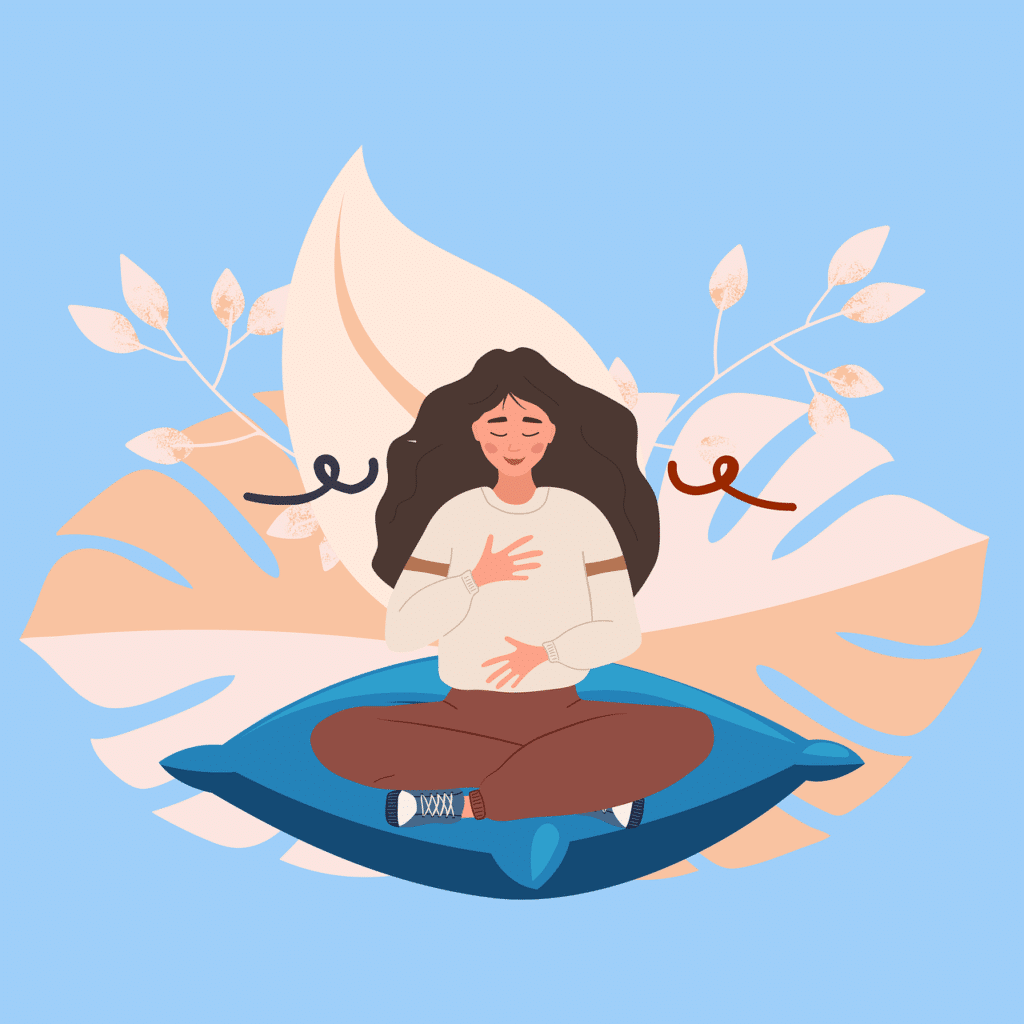
Step 2 — Diaphragmatic Breathing
- Keep your hands where they are.
- As you inhale, allow the abdomen to expand a little further under your lower hand.
- Try to keep the chest and shoulders relaxed.
- Exhale and let the abdomen soften.
Repeat for five slow breaths, aiming for smooth, rather than forced, movement.
2. Sideways Rib Expansion (Lower Rib Breathing)
- Place your hands around the sides of your lower ribs.
- Let your shoulders stay relaxed throughout.
- Inhale through your nose for a count of 4, feeling the ribs widen gently outward into your hands.
- Exhale for a count of 4–6, allowing the ribs to soften back in.
- Continue for five breaths.
We’re looking for outward expansion rather than the breath lifting into the chest or shoulders.
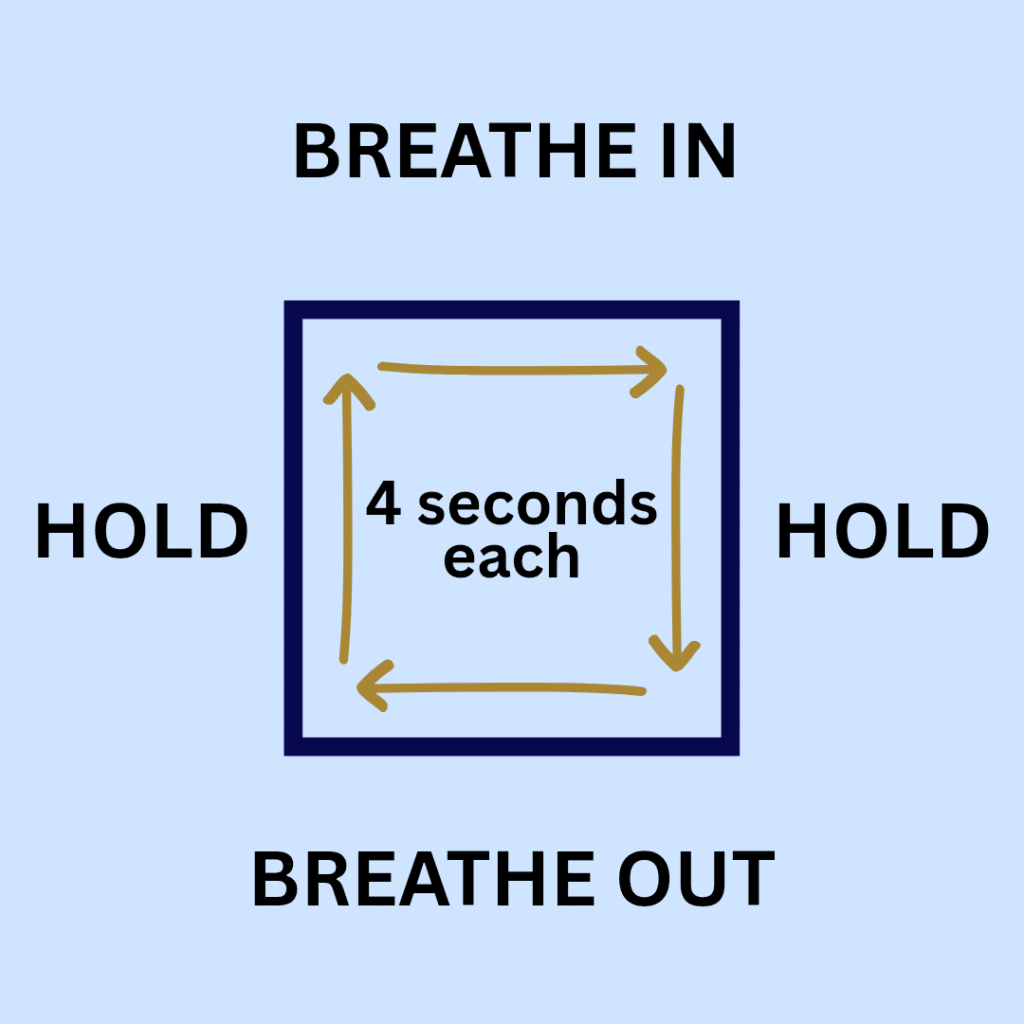
3. Box Breathing
- Sit upright and allow your shoulders to relax.
- Breathe in through your nose for 4.
- Hold for 4.
- Exhale for 4.
- Hold for 4 at the end of the exhale.
- Repeat for 4–8 cycles.
TOP TIP: Move at a pace that feels steady, never strained. If you need to shorten the holds or lengthen your exhale that is okay. The goal is relaxation, not perfection.
Allowing yourself a minute of calmness improves productivity
So next time you’re rushing around, remember the importance of allowing yourself to have 1-2 minutes of mindful breathing can make you feel calmer and more focused. By giving ourselves that time to reconnect with our breath, we’re not trying to escape stress — we’re simply giving the body the space to move through it with calmness, comfort and clarity.
In case you missed it my last article: Strength training doesn’t have to be scary: 5 simple exercises to build strength and confidence
Created 14/11/2025